Showing posts with label Reflections Photography. Show all posts

Sunday, 27 April 2014

Reflections Photography Evaluation

This project has been an interesting one for me, as the contrast from where I started with my idea to see what I ended up with is stark. From my beginning of thinking about image glitching art to represent broken memories, and my experimentation with that type of photography I knew I wanted to do something along the lines of that:


However I got stuck in a dead end trying to figure out what to shoot, and how to develop the idea further. After a conversation with Rosie I found that my idea had stemmed mostly from my own experience of confusing layouts of houses I have lived in, having moved around a lot. From then I found inspiration came quite easily. However I still think there is something in image glitching, and feel I could do something more with that in the future.

Once I had my idea, everything came quite naturally, and I didn't really have any problems until I came to shoot. I had access to houses I used to live in, but I didn't manage to get around to them all as I only had just over 24 hours to get to around 8 houses, so I had to compromise in some areas of my photography work, using photographs I already had of those houses, and taking photographs of a friends' house which was very similar to one of the houses I wanted to photograph. In hindsight I think I should have either gone back to shoot, or taken more time out to go and shoot my photographs fully.

In post-production is where I spent most of my time, and I felt that part of the project was the part I enjoyed the most, as I have already lined out in a previous post (which can be found here) I found playing around with different settings really interesting in terms of how different they could make the photographs look, and I spent a good number of hours just trying to get something I was happy with. One thing I thought was a particularly good decision on my part was shooting in RAW, so I could take the photographs into lightroom and adjust the photographs to make them look quite similar. It really made the whole post-production side of the project much easier, and less stressful than it could have been.

Having yet to hang my work in the assessment space, I can't really comment on the arrangement of the work too much as I have yet to see how they will be perceived. However, I do think the blueprint I fashioned added something to the piece, another layer of understanding which I think was essential for the audience to know to fully appreciate the photography. Saying that, I don't think the photographs are too dependent on the blueprint for understanding. They just provide information about my thinking behind the photographs, though I feel they could easily insert their own meanings to them as well.

Overall I was pleased with what I managed to come out with at the end of this project. The only real regrets I have is wanting more time to shoot, and spending so long on trying to figure out what I wanted to do for the project. Although I am happy with what I have done, I feel as if maybe they could have been even better had I realised sooner what it is I wanted to do. What I've learned from it, is that I mustn't get stuck with one idea, and explore other areas surrounding that idea too, so I don't miss something that could potentially be quite a good idea.

Displaying My Photography

As the assessment for this project includes hanging the series in my own arranged wall space, I needed to think of a way to hang them. I also felt that I could use something to accompany the photographs which would make more sense of them for an audience, as you can clearly see what I've done in the photographs, but there is a lack of knowing why I have done it.

I thought of the idea of creating a blueprint surrounding the rooms, to create a small floorplan of a house which takes into account the layout of each room I have created, and then perhaps using annotations to describe particular elements of that house, describing memories I have associated with elements of each individual photograph. After discussing this with Rosie she felt it could be a strong part of the piece as a whole and so I went ahead with it.

my original desire was to actually make blueprint paper, using some chemicals to treat paper in a darkroom like environment, and then exposing it to sunlight with my design on the paper. (Tutorial for this can be found here.) However, I decided to keep it much simpler and less technical, so I bought a large sheet of blue paper and some white pens and started drawing the floorplan out myself. I firstly did it on paper much smaller, to plan out the layout of my house and then I transferred this on a much bigger scale to my blue paper.


After adding some small features of each room I was quite happy with how my technical drawing turned out.


My annotations then consisted of small personal excerpts of my memories or knowledge of each place, to provide context.

All I need to do now is consider how I'm going to arrange my photographs, which are mounted on foam board with to the floorplan.


Photography Post-Production Results

After working in post with my photographs, I have come up with 5 final photographs for the series that I feel happy with:


As this was so heavy on post production, I spent a lot of time in photoshop just trying to get the overlaying right. Most of which came down to just choosing the right blending options of individual layers, and playing around with the opacity, and fill opacity of each one as well:


I also sometimes found that the underlying image had objects which obscured the image I was trying to lay on top, regardless of how I tried to blend it, and those occasions I mostly used the clone tool to create a roughly block colour background that matched the rest of the image, which made it a lot easier:


The incorporation of the older images was surprisingly easy as the underexposure of some photographs often made it easier to blend the images in the way I wanted, and created a really nice effect on the edges of the photos too.

Overall I found the post-production mostly just a process of playing around with each image to see what worked for each one, and it was actually very enjoyable to see what effects I could create by doing different things to the image.


Places in Memory: The Shoot

After my experimentation on the overlapping idea, I discussed it with Rosie and she thought it could be quite strong as well. So as I was going home for the weekend I decided to shoot my photography work.

My idea includes shooting around various houses I used to live in, some of which I still have access to and shoot all the rooms so that I can overlap them to create 5 new rooms out of them. I also thought it would be a nice idea to use old family photographs from the inside of houses as my family luckily was very big on taking photographs when I was younger, and much earlier too.

A few results from my shoot:


I shot them all in RAW so I could take them into lightroom in post to do some basic colour correction on them so that they all looked fairly similar, just to make it easier to blend into each other. I wanted to make it a little easier for myself as I had no control over the condition of the old photographs I wanted to use, and so would be spending a lot of time on those elements of the photographs.


Friday, 28 March 2014

Places In Memory

Last weekend I did a few tests on the previous idea of joining images together from different places. I was struggling to see how this would work in a practical sense and so I wanted to give it a little experimentation before I went out and took my photographs:


Although the blurring on the edges was just a quick job, I feel it necessary to say that I won't be doing it like that in the final result. From this quick experiment, I know I'll have to show the edges of the photograph somehow to allow the viewer to make sense of the fact that parts of the room they are looking at are from different images together.

Another element I want to try and add is photographs from my own personal family collection. Since this originates from my own past, I think it would be a good idea to use old photographs as part of the final pictures.

I have also had perhaps an idea about my presentation of these images. I was thinking that once I had created essentially five rooms made from all different pictures of places, I could draw out a blueprint of a house layout which includes the elements you see in the photograph. It would be an interesting way of displaying a distorted house, and maybe it would help the audience grasp the concept, especially if I centred the images around this blueprint so that they could be viewed together in one go.

Tuesday, 18 March 2014

Re-reconsideration

After talking to Rosie about my idea of restoration, we came to the conclusion that this was almost the opposite of the idea I started with in terms of the glitching idea, and I felt that I still wanted to hold true to this original idea. The origin of this idea came from my inability to remember places correctly from my childhood, having moved around a lot I find that my memories of certain places blur and bond together to create a new place in my head altogether, and this is what I want to show.

Rosie found this quite interesting, and as I am going home next week I suggested that I go back to these places and photograph them, then put them together in post in such a way that they blur together and create an interesting architecture or space in itself. I like this idea as it still produces the glitching and it shows the origins of the idea whilst putting something of myself into the project as well.

I can certainly do the image restoration still as a project, but I think it is too much work for this one given the time I have.

Friday, 14 March 2014

Reconsideration

After talking to Rosie about my proposition for the image glitching presentation, I am feeling much more confident about the idea. Originally I had in mind to shoot some stereotypical friendship photographs to then glitch, as more people can relate to it and such. However, I'm now unsure as I feel like those photographs won't mean anything to me.

When I think of Reflections in terms of memories, I think of how we remember places. Have you ever tried to remember a house you used to live in? How accurate do you think that depiction is? This is what interests me about the glitching idea, as it can demonstrate that in a randomized way, as you would remember it. However I feel like the photographs themselves should hold some sort of meaning, some sort of precious value to really demonstrate the loss to the audience, and I just don't think a stock photography style will do that.

I thought about trying to get my family to re-create family photographs that we have, however I don't think I have time to go home and do that. So I still had a think about how I could perhaps use the wealth of photographs my family has, some of which are over 100 years old. I am currently thinking now about perhaps doing digital restoration on old photographs to colour, and changing the colour scheme of those photographs to differentiate details of the event, then glitching them to create a series of almost identical memories.

I've had a short play with this idea using a picture of my grandad when he was in his 20's:


I firstly used the crop and straighten tool to get rid of borders and straighten the image.

I then sharpened the image to get rid of unwanted blur from the camera not being held steady/ not on a tripod.


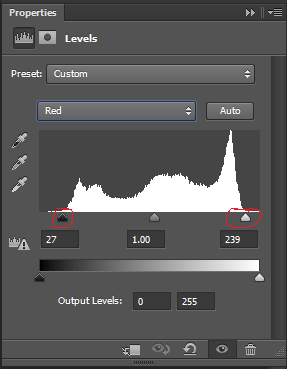
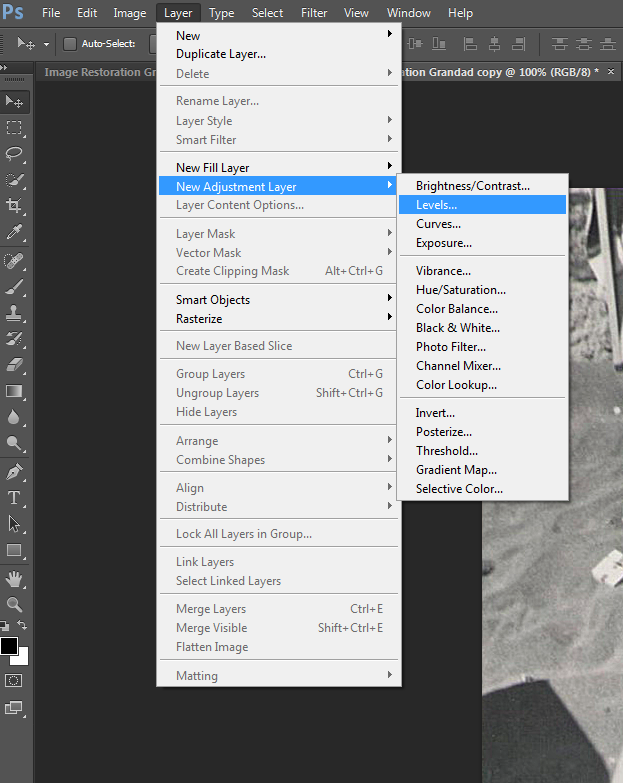
I then went in the levels of each colour channel to drag the low and high end markers to where the information starts so that the picture looks less faded and the contrasts are much more prominent.


I then went used the magic wand tool to start selecting areas to colourize, and used hue and saturation to add colour in. I did this quickly, but it still took a long time which concerns me slightly about this idea, however I like the effect it may give.


Sunday, 23 February 2014

Image Glitching Plan and Presentation


After the tests I did on image glitching, I really thought that was the way to go on the whole glitching side of the process. I liked how random the glitches were and really helps me have as little control as I can over what comes out to convey what I want to.

However I still feel like that isn't enough. This is meant to be a series of 5 images, and as much as I like the image glitching on those images is a good idea, I also feel that displaying them all in one go with no extra effort put into my presentation may make my photographs lose some of their meaning. So at first I found a link to a tutorial of how to create a hacked codec of a file to create an image glitch in a modified version of ubuntu run from a disc, which can be found here:

http://nickbriz.com/glitchcodectutorial/files/GlitchCodecTutorial.pdf

However this tutorial is more about glitching video files, and although I could do this with another type of file, it still wouldn't give me the randomizing I want, and I don't have the skills to modify that tutorial myself, nor do I have the time to learn how to do so.

I googled how to randomize images in premiere as I could perhaps use video to display my photographs, however the comments on how good premiere is at handling images as opposed to other applications was not promising, and I was led to another piece of software called ProShow Producer, which is a picture slide show production program that comes with a multitude of features and has some impressive tools such as keyframing and masking, most of which you couldn't find in something like powerpoint. Here is the cheesy promotional video they made for it:


So for now, I am looking at how I could perhaps use this to present my photographs randomly (or at least seemingly randomly) to show my photographs for their true meaning, and from what I have read in forums surrounding what I want to do, it seems that there are a lot of options surrounding my idea.

Friday, 31 January 2014

Image Glitching Exploration

Following my conversation with Rosie on my photography project, I decided to explore the idea of glitching images and removing data in an accidental or random way. I agree with what she said when she suggested that the random and accidental essence of image glitches was something I shouldn't really want to lose to follow my idea and create a full effect.

After some quick googling, I quickly came up with some ideas of how corruption in images can occur:

open the file as text using notepad and delete the first 10 or more lines of text and replace with a bunch of random letters and numbers.

 This post was in a forum from a few years ago and I was unsure as to whether this would work now because of the advancement of operating systems and programs in windows. I was proved right when I tried it a few times and the file came up as corrupted and not view able.

Next I looked at possible online programs I could use to create a similar effect.

The first few images are from a site called Corrutus 3.5, which is a web program where you upload a photo to the site and you click a mode you want it to take in the method of glitching your image and you get a few results to choose from:


The good thing I found about this method is that it is completely random, providing you don't know all of the modes and what they do. The site tells you how the glitching is achieved and you leave the rest to them.

I then tried another site which is an image glitch experiment. In this one, you can upload an image and control the amount of glitching, and how it is glitched, or you can also completely randomise it:


I liked the effect that this gave, although I was disappointed somewhat as the glitching was all very similar, with just different colours and different parts of the image showing, which I felt wasn't random enough and didn't reflect fully what I wanted to show.

The drawback of both of these methods is that they are relatively easy to achieve, and while it creates a nice effect, I feel like it wasn't self-created and I don't know whether I'd be happy letting something else create this corruption. So, I looked at more ways I could create this effect and came across the suggestion of a HEX editor in a forum, which would allow me to change the values of the data in the jpeg to create something perhaps that is viewable, although I haven't had chance to experiment with it yet. However, I would like to experiment with corrupting CR2 files as well as jpegs to see what effect that may give as well.

Thursday, 23 January 2014

Seems Good.


While on the subject of fragmented memory or false memory, I remembered something I had heard about in a youtube video once. The channel Vsauce, handles difficult life questions and tries to break them down to find an answer. In particular, this video was about deleted files. The picture above is part of a collection by a photographer called Melanie Willhide, which came about after her laptop was stolen and later recovered to find her photographs deleted. She used recovery software to get the photographs back, but they were corrupted in a very visual way such as the one above. She later used them in a collection which she named after the thief, Adrian Rodriguez.

Another from the collection:

This got me thinking about how fragmented memory could be used visually, and an idea struck me that I think I could use for the photograph series portion of the Reflections unit. I feel that I could perhaps take the same photograph 5 times with details of it changed to show a confusion over the reality of a moment in memory, or I could use a post-processing technique similar to the result of the accidental corruption by Rodriguez, and in a similar fashion use the same photograph five times and digitally distort parts of the photograph as if there is data missing like fragmented memory.

I think this could be a really interesting concept if I did it properly, though this idea may require more development and research.


Memory in Photography

As well as coming up with an idea for a film to do with memory, I have to also create a series of 5 still images to do with memory. From my previous posts you can see I have been researching about what it is to remember something, and fragmented memory or false memory in particular. However, a lecture revealed to me other ways of looking at memory in photography.


This is probably the first photograph ever taken.


This is the largest camera ever made to take the largest picture ever taken.

These milestones in photography are an interesting way at looking at memory I feel as it's important to remember key points in certain parts of history that interests you.

Tuesday, 14 January 2014

Something Blue

The last thing I decided to do for this task was a nod towards my hobbies. Outside of being a film-maker and a lover of the digital world, I enjoy doing things creatively that have also been around for centuries. I often find myself battling with the necessity of the digital and the distrust I have for it. As someone who knows and is familiar with many elements of digital life, I trust it very little. I think we rely too much on it, and although it is important, and technology is the future and I embrace that, I sometimes feel that you just can't beat being able to make something physical, something real and tangible. As a result, I spend a lot of my time knitting and making complicated origami figures, because I love having a skill like that.

To memorialise this, I knitted a square in a pale blue, and made a simple origami heart, using needle and thread to bind it.


Recycling

As a student, I feel that most students get a bad reputation when it comes to their diet purely because, well, they tend to eat a lot of rubbish. Pizzas and take-outs. Not me though, I love cooking too much. I love experimenting with dishes and flavours. So, when I look in my purse I don't find a load of receipts for Subway or Dominoes. Also, as much as I am a film-maker, I love creating new objects out of recycles materials and it is almost always things you can use. So, to memorialise my love of recycling the old to create the new, and to memorialise my attitudes to my own purchases and diet, I made a purse out of receipts:


Roots

As someone with an extremely large family history, I feel I need to memorialise my interest and my acknowledgment of that in some way. We have a confirmed history of one line of my family back to the 1400's, which is quite something really. This idea came to me when my nan asked me to scan some old family photographs into her computer for her. Most of them were pictures taken in the late 1800's to the early 1900's, and they were mostly postcards as well. I found this notion very interesting as I'd never thought of family portraits being taken as postcards. However during the 1800's and 1900's it struck me that Britain were at war a lot, defending the empire and such, so of course it was natural. Here are a few of the postcards in question:


Taken between 1894 and 1901.


Date unknown. Taken in a photography studio in Commercial Road, Portsmouth.


Date unknown. The adults are my Great-Great Grandparents and the child with the attractive glasses in the front is my Great Grandmother.

I am fascinated by things like this. Just knowing what they looked like, knowing who they were makes me excited. To memorialise this, I recreated a family photo by superimposing myself on to the background of one and printing it as a postcard. Here is the picture I was using as a reference:


And here is my take on it:

Front:


Back:


Fashuuun

I've always found it fascinating how my own styles in clothing change. All throughout my life I've actually been able to observe the changes, without even attempting to stop it. Self-reflection has always been something I'm good at. Most recently my sense of colour has changed, along with my longing for practicality in my clothes. I no longer want to spend £20 on a bunch of stuff from Primark as it doesn't last 5 minutes in the real world. Maybe that's a maturity thing, I don't know but I've definitely noticed. I also have a love of the old.

So, to memorialise my fashion sense now, with the purpose of being able to make a comparison in the future, I tried to mimick fashion photography, especially in the style of a website I found called http://lookbook.nu/, which gather styles from all over the world and capture something I enjoy wearing a lot.